The changing London skyline
Tower Bridge viewed from Wapping
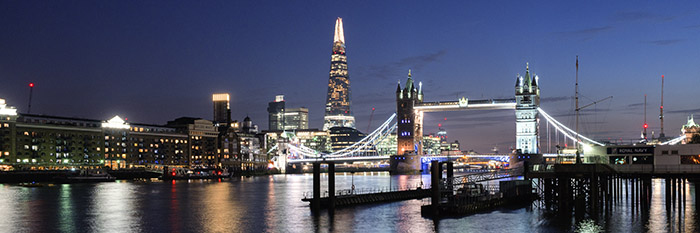
Changing London Skyline: Tower Bridge and the Shard from Wapping 2017
The Changing London skyline is illustrated by one scene shot nearly two decades apart.
A couple of nights ago I photographed Butlers Wharf, the Shard and Tower Bridge from Wapping.
This view is one of London’s most striking cityscapes. The Shard, to the left of Tower Bridge is, at 309 metres, the tallest building in the UK. It is a full 100 metres higher than the runner up – 1 Canada Square at Canary Wharf.
But roll back almost twenty years.
I photographed a similar view from the same location. In 1998 the Shard was not even a hole in the ground. Zooming in to the earlier shot there is an advertisement offering flats in the first phase of flats in Butlers Wharf, the historic building to the left of the image.
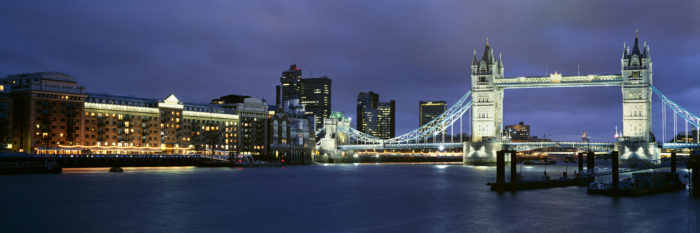
Changing London Skyline: Tower Bridge from Wapping 1999
I decided to do a little research into both these projects.
There are two buildings (which merge together) immediately to the right of Butlers wharf in the 1999 picture. The first is Guys Hospital and the second, Southwark Towers. Completed in 1975, several years later Southwark Towers became the London headquarters of the accountants Price Waterhouse. In 2008 it was destroyed to make way for the Shard.
Redevelopment of Southwark Towers was planed in 1998. The Shard was conceived in 2003, and building work started in 2009. It was finished in 2012 and is the fourth tallest building in Europe behind three Moscow skyscrapers.
In the late 2000’s the preferred way of demolishing a building was by imploding it. But the proximity of Southwark Towers to Guys Hospital made this impossible, and the building was dismantled in pieces.
Butlers Wharf was a development along London’s South Bank started by Sir Terrance Conran. The project stalled in 1992 and went into receivership. Attempts to sell studios for £130,000 and three bedroom flats for £425,000 yielded little interest.
Eight years later a one bedroom flat sold for £425,000 and a three bedroom flat £850,000. Nineteen years on three bedroom flats are being marketed at £4 million pounds!
These scenes may have been photographed nearly twenty years apart, yet most of the changes happened in the last decade after the financial crisis of 2008. In the recovery period which followed London’s skyline changed more than in any period for decades.
I have documented much of this change through regular photographic sorties along the River Thames. Many pictures from five to ten years ago now make very interesting viewing.
The City ("Square Mile") viewed from the South Bank
Compare these two scenes. Similar locations nineteen years apart. The pace of change could not be more obvious.
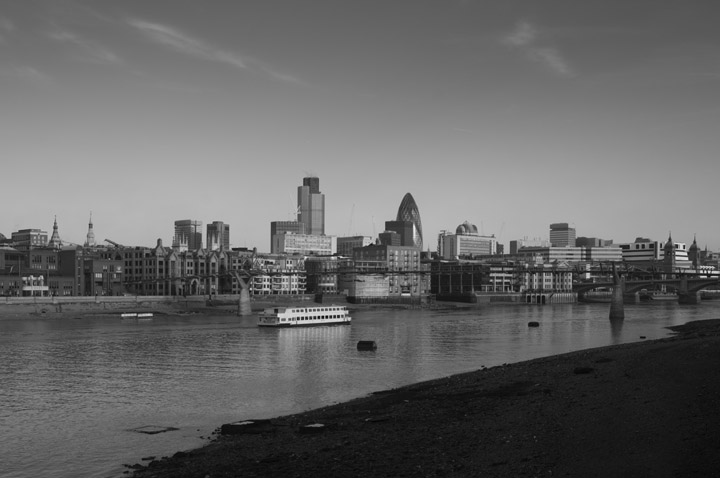
City of London Skyline in 2005
Dateline December 2005, the City of London skyline and one of the first photographs of London in my professional era. This view stretched from Blackfriars to Cannon Street railway bridge. Just two skyscrapers are visible - the NatWest tower slightly left of centre and 20 St Mary Axe ("the Gherkin) slightly right of centre.
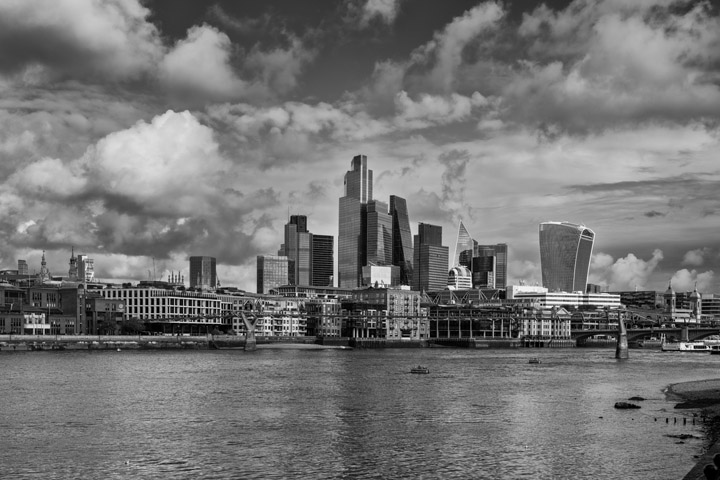
City of London Skyline 2024
Roll forward to October 2024. The same City of London skyline shot from a similar location. The same but different.
The NatWest tower is now barely visible. The Gherkin is dwarfed and obscured by the monster skyscrapers which have been built in the last twenty, but mainly the last twelve years as London recovered from the global financial crisis of the late 2000's.
Now in view are the Salesforce Tower (formally Heron Tower), the NatWest Tower, 22 Bishopsgate, 8 Bishopsgate, the Leadenhall Building ("Cheesegrater"), 52 Lime Street ("Scalpel") and 20 Fenchurch Street ("Walkie Talkie").
 Quite simply, the best photography of London I have ever seen